


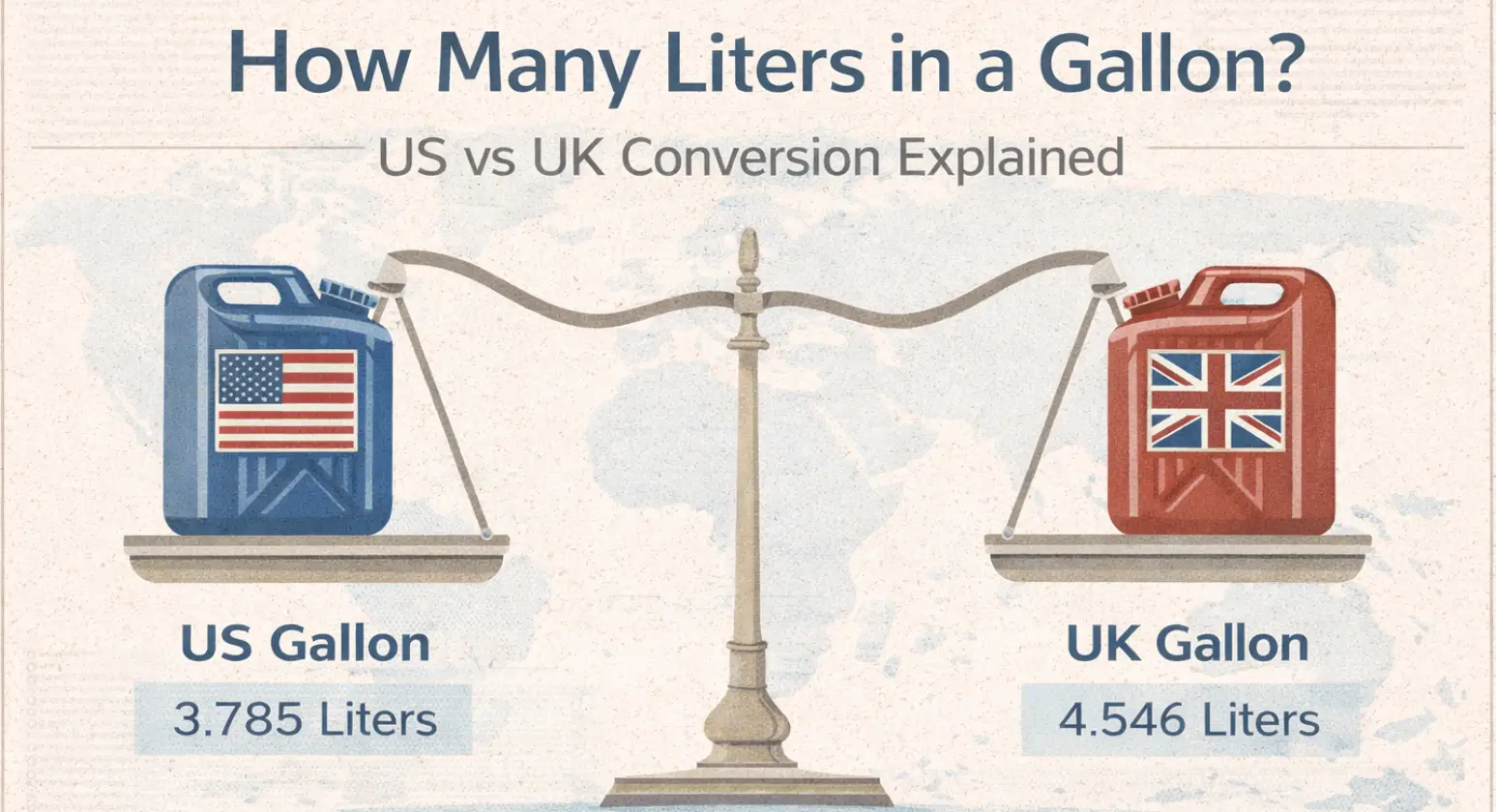
For many of us, when watching foreign videos or products, the measurement ” gallon ” must have caused confusion. The United States and the United Kingdom use different gallon measurements because their measurement systems are not the same. People need to understand this distinction because it affects their travel activities and their international business operations.
The conversion between US gallons and UK gallons requires knowing that 1 US gallon equals 3.785 litres and 1 UK gallon equals 4.546 litres. The guide will show you how to distinguish between gallons and litres when you purchase fuel or other liquids.
What is a Gallon?
A gallon is a liquid measure that defines a specific volume. The UK and the US have different measurement systems which creates this difference. The UK uses a larger gallon size for fuel efficiency because it requires this measurement. Miles per gallon readings are higher in the UK than in the US.
The two main types are:
- US liquid gallon
- UK imperial gallon
Even though they have the same name, their sizes are different.
Where These Measurements Matter Today
The difference in US and UK gallons is relevant in the following situations
➤ Fuel Efficiency
In the US, vehicles are rated for miles per US gallon. In the UK, the measure might be miles per imperial gallon.
➤ Cooking and Recipes
Recipes may include gallons as a measurement. The difference is important in ensuring that you do not get incorrect measurements.
➤ Travel and Relocation
If you are planning to relocate to or visit another country especially the US or the UK, this difference is important when purchasing fuel or groceries.
➤ Trade and Shipping
Businesses may need to know the difference in gallons as they may be shipping products across borders.
➤ Education and Exams
In most cases, you may be required to know the difference in measurement as you take your exams in mathematics and science.
Comparison Table
This comparison table gives you a clear idea of how many liters in a gallon.
| Type | Gallon to liter conversion | Explanation |
| US Gallon | 1 US gallon = 3.785 liters | Commonly used in the United States for fuel, beverages and daily measurements. |
| UK (imperial) Gallon | 1UK gallon = 4.546 liters | Used in the United Kingdom and some Commonwealth countries larger than the US gallon. |
| Key Difference | UK gallon = 20% larger | Important for travel, cooking, and fuel comparisons to avoid confusion. |
A gallon is not the same worldwide. Always check whether it is US or UK to ensure accurate conversions.
Easy way to Remember
US gallon = 3.8 liters
UK gallon = 4.5 liters
Remember the UK is larger than the US gallons.
Why are there two different Gallons?
The difference between the US and UK gallons is due to historical and definitional changes. In 1824, Britain defined its imperial gallon system based on water. The US continued to use the older British wine gallon by making the UK gallon larger and the US gallon smaller.
The volume of a UK gallon is 20% larger than that of a US gallon. This is a significant difference that must be understood because it is applicable to fuel measurements and international trade.
Final thoughts
Most people have wondered how many liters in a gallon. Hope you are clear now. The US gallon has a volume of approximately 3.785 liters whereas the UK or imperial gallon has a volume of approximately 4.546 litres. People who do not understand the conversion process will see a minor difference that can lead to significant problems in fuel efficiency calculations that use gallons as a unit of measurement.
The distinction between these two systems of measurement provides improved accuracy and operational effectiveness for people who travel or work in logistics or manufacturing.
Read Also – How Many Quarts in a Gallon

1 Comment
I truly appreciate your technique of writing a blog. I added it to my bookmark site list and will