


Short stories are emotional architecture. They strip away everything except what matters, distilling feeling into its purest form through carefully chosen detail and moment. A short story writer spends hours or days crafting a scene that hits emotionally in a few pages, which means that emotional core is already fully formed and tested. The challenge used to be that translating a short story to screen required production resources that rarely made financial sense for something short-form.
Text to video generation removes that barrier, allowing a writer’s carefully constructed emotional moment to become generated footage that carries the story’s original emotional weight without needing the traditional production apparatus.
Dreamina’s Seedance 2.5 model was built specifically to understand how to render emotional complexity through visual language, translating the interior emotional landscape of a story into footage that viewers can actually see.

Why Short Stories Are Perfect Source Material for Video
Short stories have already done the hardest creative work – distilling an idea into its most powerful form. The emotional arc is clear. The characters are defined through essential detail. The conflict is stripped down to its core. That efficiency translates directly into text-to-video, since everything unnecessary has already been removed, leaving only what actually matters.
This is different from adapting a novel, where a creator must choose what to keep and what to cut. A short story has already made those choices. A creator generating video from a short story is really just translating the writer’s existing editorial decisions into visual form.
Emotion as the Throughline
A short story’s plot might be minimal, but its emotional movement is usually precise and intentional. A character starts in one emotional state and ends in another. The story documents that journey through specific moments and revelations. That emotional throughline is what makes a short story work as literature, and it’s exactly what should anchor a video adaptation.
When generating video from a short story, the emotional arc matters more than plot accuracy. A scene that captures the emotional moment the story depicts will succeed even if minor details differ from the text. The inverse is also true – a scene that captures visual accuracy but misses emotional tone will feel hollow and inauthentic.
The Power of Dialogue and Silence
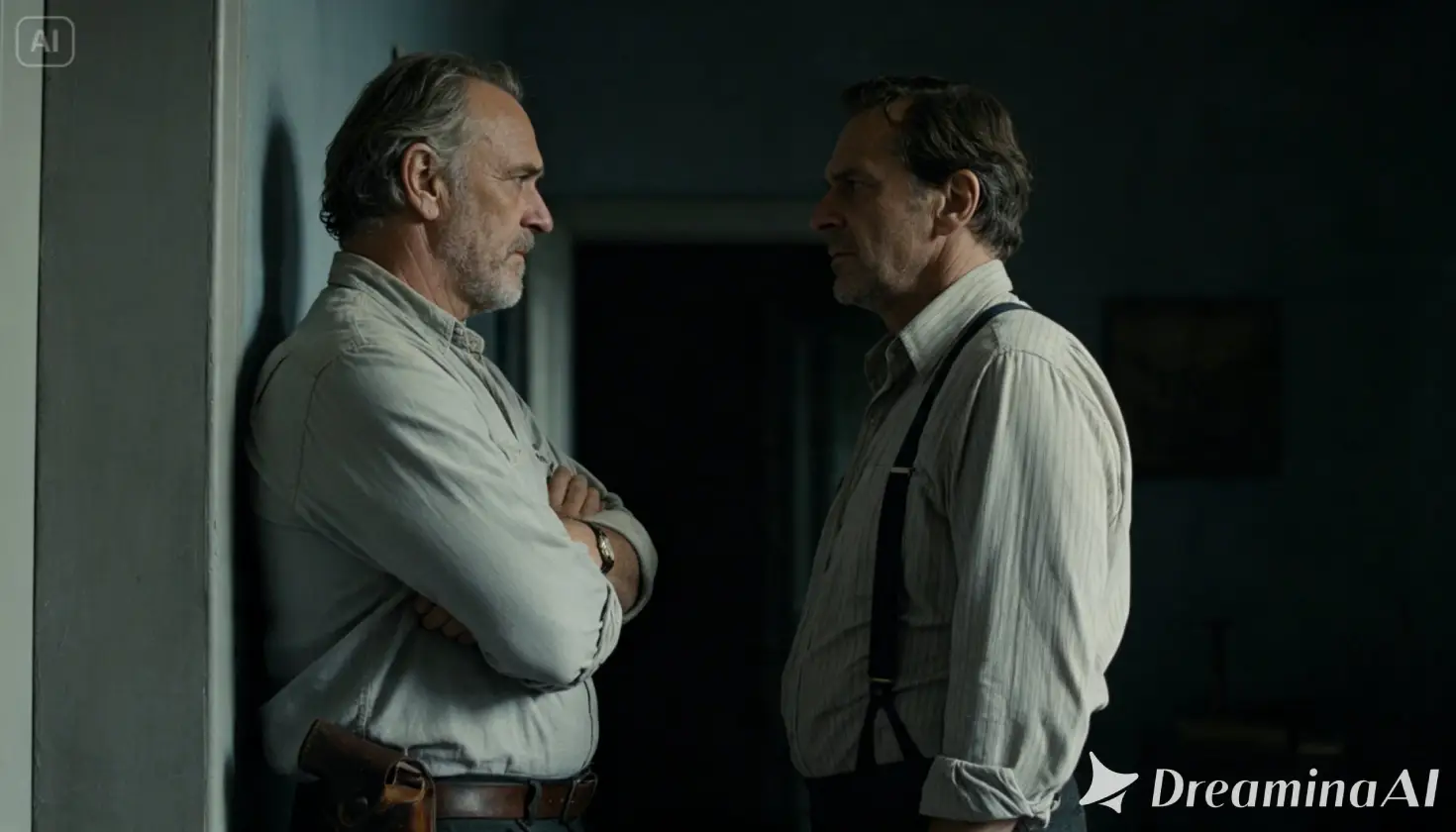
Short stories often use dialogue economically, which means when characters speak, their words carry weight. That dialogue becomes the foundation for generated video, since the words are already written and the character voice is established. The video needs to render how those words are delivered – the hesitation, the emotional subtext, the way tone contradicts or reinforces content.
Silence matters equally. A long pause in a conversation carries meaning. A moment where a character doesn’t speak is often louder than any dialogue. Text to video allows both speech and silence to be rendered with the emotional weight they deserve.
From Short Story to Emotional Footage
Step 1 – Identify the Emotional Moment and Describe it Completely
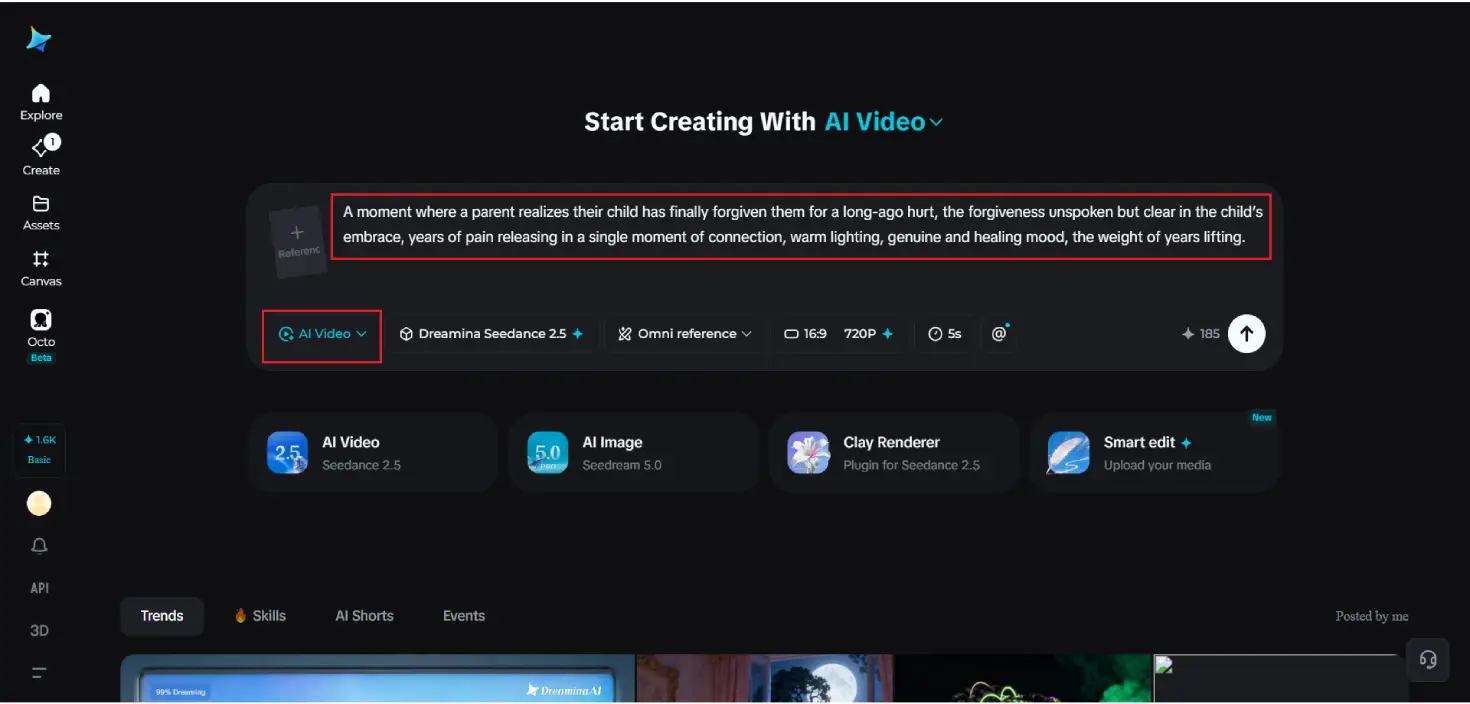
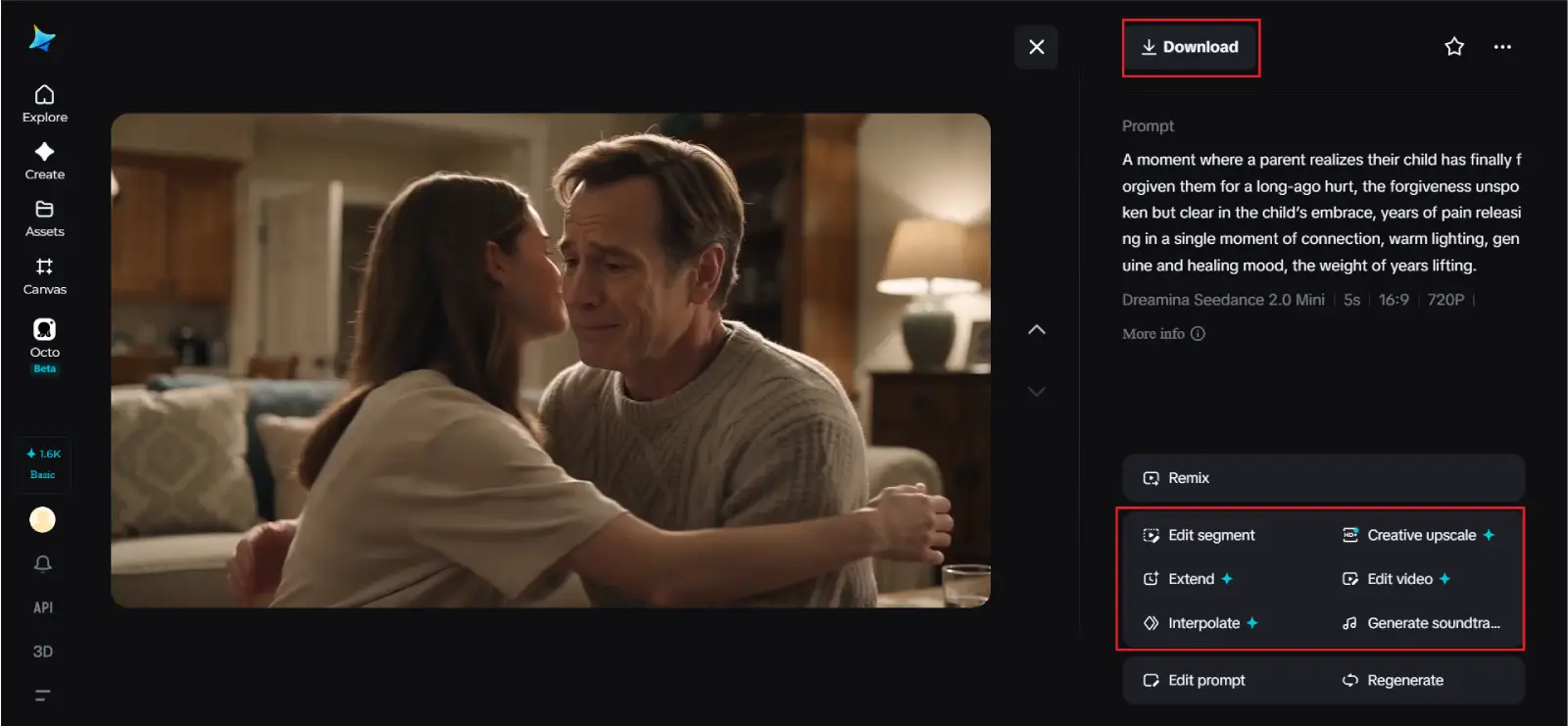
Visit Dreamina, sign in, and head to the “AI Video” section. Select the scene or moment from the short story that contains the most emotional weight. Read it multiple times, noting the emotional state of characters, the specific sensory details, the precise pacing. Click “Add reference image” if you have visual reference. Write a prompt that captures the emotional moment and how it should be rendered.
A prompt might read: A moment where a parent realizes their child has finally forgiven them for a long-ago hurt, the forgiveness unspoken but clear in the child’s embrace, years of pain releasing in a single moment of connection, warm lighting, genuine and healing mood, the weight of years lifting.
Step 2: Generate the Emotional Scene with Seedance 2.5
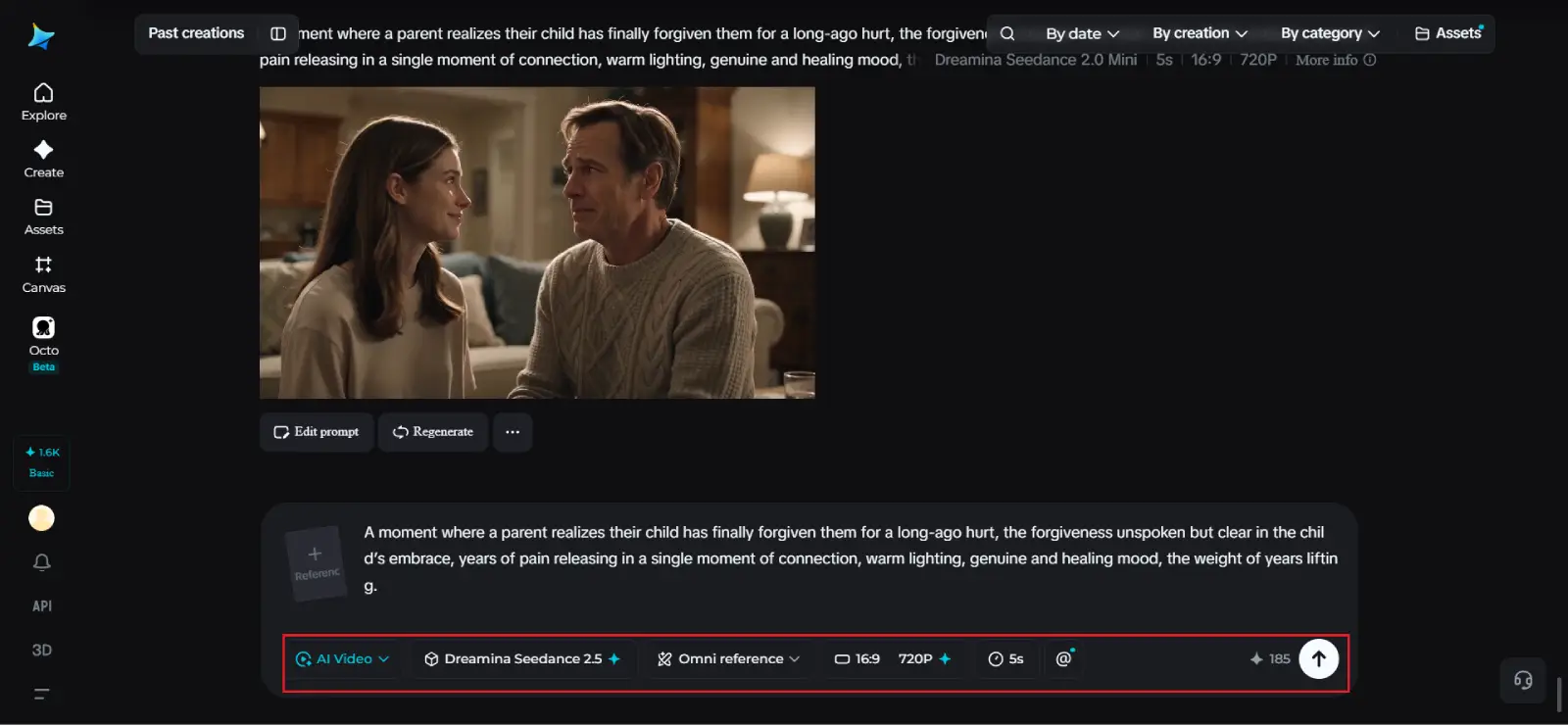
Select the Seedance 2.5 model. Choose 30 seconds for focused emotional moments, longer if the moment needs time to develop. Pick 16:9 for short film contexts or 9:16 for social sharing. Click Dreamina’s generation icon and let it render the story’s emotional core.
Step 3: Verify Emotional Authenticity and Finalize
Use Dreamina’s AI editing tools carefully – Upscale for facial detail where emotion is readable, Generate Soundtrack for subtle audio that supports tone. Review whether the generated scene carries the emotional weight of the original story; once it feels emotionally true, export and share.
What Makes Seedance 2.5 Built for Emotional Storytelling
Seedance 2.5 was designed to render the subtle emotional and behavioral details that make stories land emotionally, translating prose emotion into visual authenticity.
Facial Expression that Communicates Internal State
The model renders micro-expressions and emotional shifts with enough fidelity that a character’s internal experience becomes readable through small changes. Years of emotion can flicker across a face in seconds, and that complexity can be captured without requiring acting performance or over-explanation.
-
Subtle expression shifts communicate emotional depth
-
Internal conflict becomes visible through facial changes
-
Emotional evolution happens naturally through a scene
-
Vulnerability and strength coexist in authentic ways
Physicality That Reveals Character Beneath Dialogue
Motion transfer consistency has improved to over 90%, allowing gesture and movement to carry emotional weight separate from what a character says. A character can say one thing while their body language communicates something different, creating the kind of subtext that makes emotional scenes compelling.
-
Physical habits reveal character and emotional state
-
Gestures carry meaning beyond their literal action
-
Tension or comfort becomes visible in posture
-
Movement patterns show emotional evolution through scenes
Dialogue Delivery that Preserves Emotional Subtext
The model understands dialogue as performance, capable of rendering how emotion shapes delivery. A character can speak words that sound cheerful while seeming uncertain. They can deliver a confession hesitantly or with sudden clarity. That vocal performance carries the story’s emotional truth.
-
Dialogue carries emotional weight beyond literal words
-
Vocal delivery reflects internal state and conflict
-
Hesitations and emphases reveal what matters
-
Character voice remains authentic and distinctive
Pacing that Respects Emotional Rhythm
Single-clip generation extends to 30 seconds, with Ultra-long Video Generation mode reaching 180 seconds. Emotional moments need time to breathe. A reveal that happens too quickly loses impact. A moment of connection that’s rushed feels hollow. Extended duration allows emotional beats to develop naturally.
-
Emotional moments develop at natural pace
-
Silences land with appropriate weight
-
Revelations have space to sink in
-
Character reactions evolve realistically over duration
Consistency that Maintains Emotional Authenticity
Cumulative errors that used to cause subtle drift across a sequence are largely resolved, which means a character’s emotional journey stays consistent from opening to closing, and a viewer can track emotional evolution without being distracted by visual inconsistencies.
-
Character appearance and behavior remain consistent
-
Emotional arc progresses believably
-
Viewer investment in character remains stable
-
Multiple emotional beats resolve coherently
Extracting Emotional Cores from Existing Stories
The key to adapting a short story is identifying what the story is actually about emotionally. What feeling does it leave a reader with? What emotional journey does the protagonist experience? That emotional core becomes the foundation for video generation, and everything else serves that core.
When a Story’s Feeling Becomes Visible
The most powerful adaptations are those that honor the original writer’s emotional intent. With Dreamina and its Seedance 2.5 model, a short story’s carefully constructed emotional architecture can move from prose into generated video that allows viewers to actually see and feel what the story conveys, bringing the writer’s emotional vision to life in a form that honors both the story and the possibilities of visual storytelling.
Read Also – ChatGPT Photo Editing Prompts
