


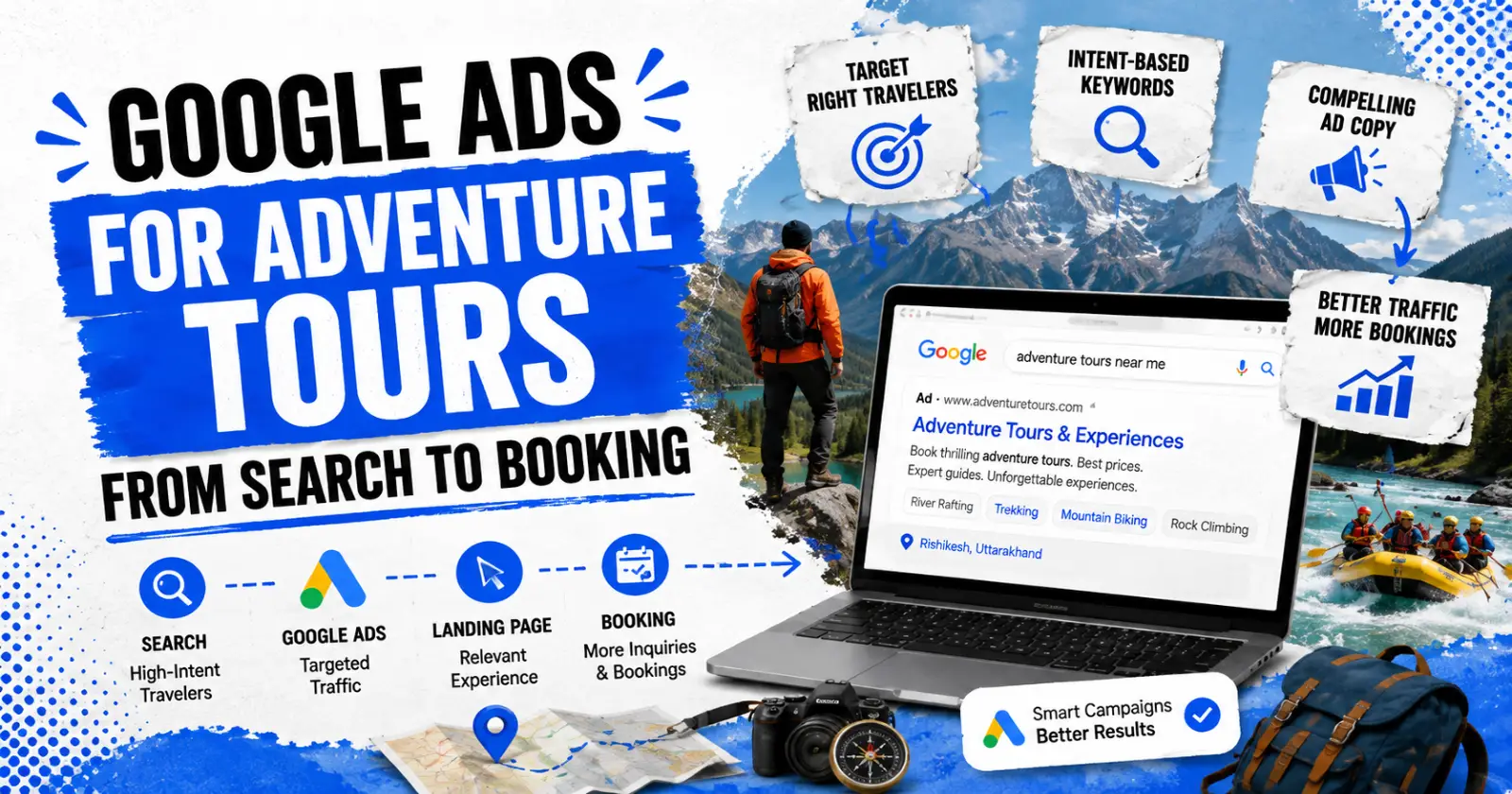
Adventure tourism is now a very competitive online space, and honestly it kind of feels like every tour page is fighting for attention at the same time. Travelers often open Google first, then they compare destinations, activities, what it costs, star reviews, and even which tour operator is more “real” before they book. For adventure businesses, showing up at the right moment can be the whole difference between getting a customer and watching them sail off to a rival.
Google Ads for tour operators can make it easier to reach travelers who are already looking for the exact kind of experience they plan to reserve. Instead of simply waiting for someone to stumble on your website via organic search, paid ads can put the right tour right in front of them, like at that moment they are scrolling and deciding.
Why Google Ads Matter for Adventure Tours
Adventure travelers usually have this one particular thing in mind, like a hiking route, rafting time, wildlife safari, some mountain trip, or maybe a guided outdoor session. They might type “hiking tours”, “whitewater rafting”, “animal safari”, “mountain excursion”, and similar stuff, and yeah, it often shows real interest. In many cases, there is also pretty high booking intent, even if people don’t say it out loud.
Market research says that travelers are looking up choices online more and more before they finally commit to a travel decision. So it’s like adventure tour companies get a window of opportunity to reach people while they are still weighing options and comparing. That moment is valuable.
Then there’s Google Ads for adventure tour businesses. It helps them aim at searches tied to their exact activities, the destinations they cover, and the specific packages they offer. When the ad lines up closely with what someone actually searched, it’s easier to bring in the right kind of visitors, the ones more likely to check out the tours that are available.
Understanding Search Intent
Not every traveler who looks up something that sounds like adventure is already ready to book, or well kinda ready… some folks might just be mapping out places, doing casual research or collecting ideas, and then there are others who are already side by side comparing different tour providers. Getting what that difference is really matters when someone builds a paid search campaign. Someone typing “best adventure activities in Colorado” might still be in the thinking stage, while a person searching for “book Colorado rafting tour” is way closer to actually deciding and taking action.
For Google Ads, adventure tourism businesses can be organized around these different levels of intent. In practice, companies can set up separate campaigns and advertisements that match what people are trying to find, not just reusing the same talk for every single search.
Choosing the Right Keywords
Keyword selection is sort of one of the most important parts of an adventure tourism campaign, though it can sound obvious. In practice, the keywords should match closely the tours and the whole experience that the business actually offers, not just “something similar” in a vague way.
For example, a hiking company might aim at searches connected with guided hiking tours, private mountain tours, destination hiking experiences, or even certain hiking spots. And a rafting company could go even more specific, like rafting trips, river adventures, family rafting, or guided rafting experiences.
From what I gather, businesses often get more control over their advertising budget when they focus on relevant searches that are also commercially valuable, instead of trying to catch every travel keyword floating out there.
Location-based keywords are useful too. Travelers often type in destinations right inside the search, because they already kind of know where they want to go. That behavior creates a real opening for tour operators to connect their ads with people searching for experiences in that exact place.
Writing Ads That Sell the Experience
Adventure tourism is kind of different from many other industries, because people aren’t just picking up some product. They’re buying a moment, a memory, and, pretty often, a whole lot of adrenaline.
Because of that, the advertisement copy shouldn’t only say the tour name; it should sort of describe what makes the whole experience worthwhile and also why someone should pick this company instead. Not just a quick sell, more like a promise, in a calmer way.
For example, a mountain tour ad could stress experienced guides, uncommon routes, small groups, flexible booking, or a destination that you really cannot forget. Those specifics help the ad stand out, even when competitors look similar on the surface.
Adventure tour operators running Google Ads campaigns should keep the message tied to what customers will actually get. When the wording is clear and specific, the ad tends to feel more relevant, and it also makes users more likely to jump to the website.
Create Relevant Landing Pages
Getting someone to click an advertisement is just the first step, right? But then what happens after the click matters a lot, because it can really decide if that visitor turns into a customer or not.
For example, if an ad is promoting a particular rafting tour yet it routes people to a bland general homepage, then the visitor has to dig around the site to locate the exact details they were promised. And that extra searching, that little maze, becomes needless friction.
A well-related landing page should keep the same idea and tone as the ad. Kind of like, it needs to say it all without going around in circles. It should spell out the tour, where you go (the destination), how long it lasts, the cost, what spots are available, what is included, and the actual booking process.
It should also make the next action feel obvious, like you already know what to do next. Whether the goal is to book, check availability, or send a request for more details, people shouldn’t have to hunt around for the right option or guess where to click, because everything should be right there.
Use Location Targeting Strategically
Adventure tour businesses usually work with certain destinations, so location targeting matters a lot, kind of directly, you know. A company that runs tours in, say, one area, does not always have to display advertisements to people who have no real link to that place.
With Google Ads, businesses can decide where their ads appear, and they can also tweak campaigns based on the target markets. That tends to lower all that irrelevant traffic, and it keeps the advertising budget more “on point”, less wasted.
Google Ads for tour operators can get even better if businesses build campaigns around key destinations, and then customize the ad messaging for the kind of travelers who are actively searching those locations.
Make the Booking Experience Simple
A great advertisement cannot fully cover for a tough, kind of messy booking process. Travelers might just bounce off a website if they can not quickly get the full price, the availability, the tour details, or what happens next- you know, the next steps.
Mobile usability matters a lot too, because many travelers are looking things up on their phones while they are researching and planning trips. A slow or overly complicated mobile booking experience can make pointless roadblocks show up seemingly out of nowhere.
The booking process should stay simple, and it should also feel easy to understand. Key information needs to be right there, easy to find, not tucked away where nobody looks. And the calls to action like “Book Your Adventure” or “Check Availability” should clearly lead visitors toward the next move, full stop.
Use Google Ads Assets
Google Ads assets, depending on how you set them up, can add extra bits of detail and kind of make the advertisements more helpful. Adventure tour businesses can take advantage of the right assets to show off different tour groups, where they go, plus booking routes, special deals, and even contact information.
For instance, sitelinks can send people straight to hiking tours, rafting experiences, private excursions, or family-based activities. That means visitors get to the page they need faster, without having to trudge through the whole website first.
And when these assets really match the main ad message, they can open up further chances to pull in those more relevant clicks.
Track Bookings Instead of Just Clicks
Clicks and impressions can show how many people interact with an advertisement, but they kinda don’t tell a business if those visitors actually turn into revenue, not really. For adventure tour companies it helps to track the more meaningful actions like completed bookings, booking requests, phone calls, and other inquiries. That way the business can, more or less, see which campaigns and keywords are bringing in real customers.
Sometimes a campaign gets thousands of clicks but only a handful of bookings show up, and then everyone feels confused. Another campaign might pull in fewer visitors, but still generate noticeably more revenue. By looking at conversion info, the business gets a clearer view, so they can decide where to put the advertising budget.
According to market research, things like conversion rate, cost per booking, return on ad spend, and revenue give a much clearer, more practical picture of how the campaign is performing than traffic numbers alone do.
Keep Testing and Optimizing
A Google Ads campaign shouldn’t be treated like it’s just something you can make once and then leave alone. People search differently, the market gets more crowded, seasonal demand shifts, and customer preferences can drift over time, even if you believe everything is kind of stable.
A business should regularly review the search terms and flag the irrelevant searches that quietly drain the budget. Also, they can run small experiments with different headlines, descriptions, promotions, landing pages, and call-to-action phrasing to find out which wording actually attracts the right type of visitors.
For instance, one ad might lean into the thrill of the full experience, while a different one could highlight knowledgeable guides, safety measures, or a more flexible booking option. Then, by looking at performance numbers, you can see which message brings in more qualified customers, not just more clicks.
So, Google Ads for adventure tour operators should be more like an ongoing testing and refining process, rather than a one-time campaign arrangement.
Take Advantage of Seasonal Demand
Adventure tourism, yeah, it tends to live and die by the seasons. You notice how demand shifts a lot, sometimes in pretty dramatic ways, across the year for different activities. Things like skiing, rafting, hiking, wildlife tours, and other options can each have their own high points, like a peak window that arrives sooner than you expect.
Because of that, businesses have to adapt how they advertise. They can push for more reach when people are actively looking, and then highlight the right packages, or even swap in alternative experiences, when it’s slower.
Seasonal messaging can also feel more urgent, as long as it matches real availability. If the message talks about the coming season, or mentions limited tour dates, or says there are still weekend slots open, it can nudge travelers to decide sooner.
Focus on the Complete Customer Journey
Google Ads should really be seen as part of the whole customer journey, not kind of doing its own thing, separate from the rest of the marketing strategy. A traveler might click an advertisement, browse a bunch of tours, compare with competitors, read some reviews, then come back later to the website, before actually booking. So businesses really need to think about what happens at every stage of the decision process, not just the first moment someone lands.
Remarketing can help re-engage earlier website visitors, where it makes sense and where it is allowed. At the same time, keeping the same general message across advertisements, landing pages, reviews, and the actual booking experience can build that reassurance people look for, you know.
The main objective is not only to get a click, period. The point is to guide the traveler from searching into consideration, and then all the way toward booking.
Conclusion
Adventure tour businesses are kind of in a race with each other for travelers who are actively hunting for exciting experiences and activities. If you put a well-planned Google Ads campaign in place, it can help these operators meet potential customers at exactly the right moment, then gently guide them into a booking.
There’s a lot going on behind it, from figuring out search intent and picking relevant keywords, to writing advertisements that feel persuasive, and not generic. After that, you’ll still need focused landing pages, and then you track real bookings, not just clicks, so the whole thing actually makes sense over time.
Google Ads for adventure tourism operators usually performs best when you concentrate on relevant searches, strong memorable moments, clear messaging, and results you can measure without guessing.
The objective is almost straightforward: take relevant searches and turn them into qualified visitors, make those visitors become bookings, and turn the advertising budget into steady business growth.
