


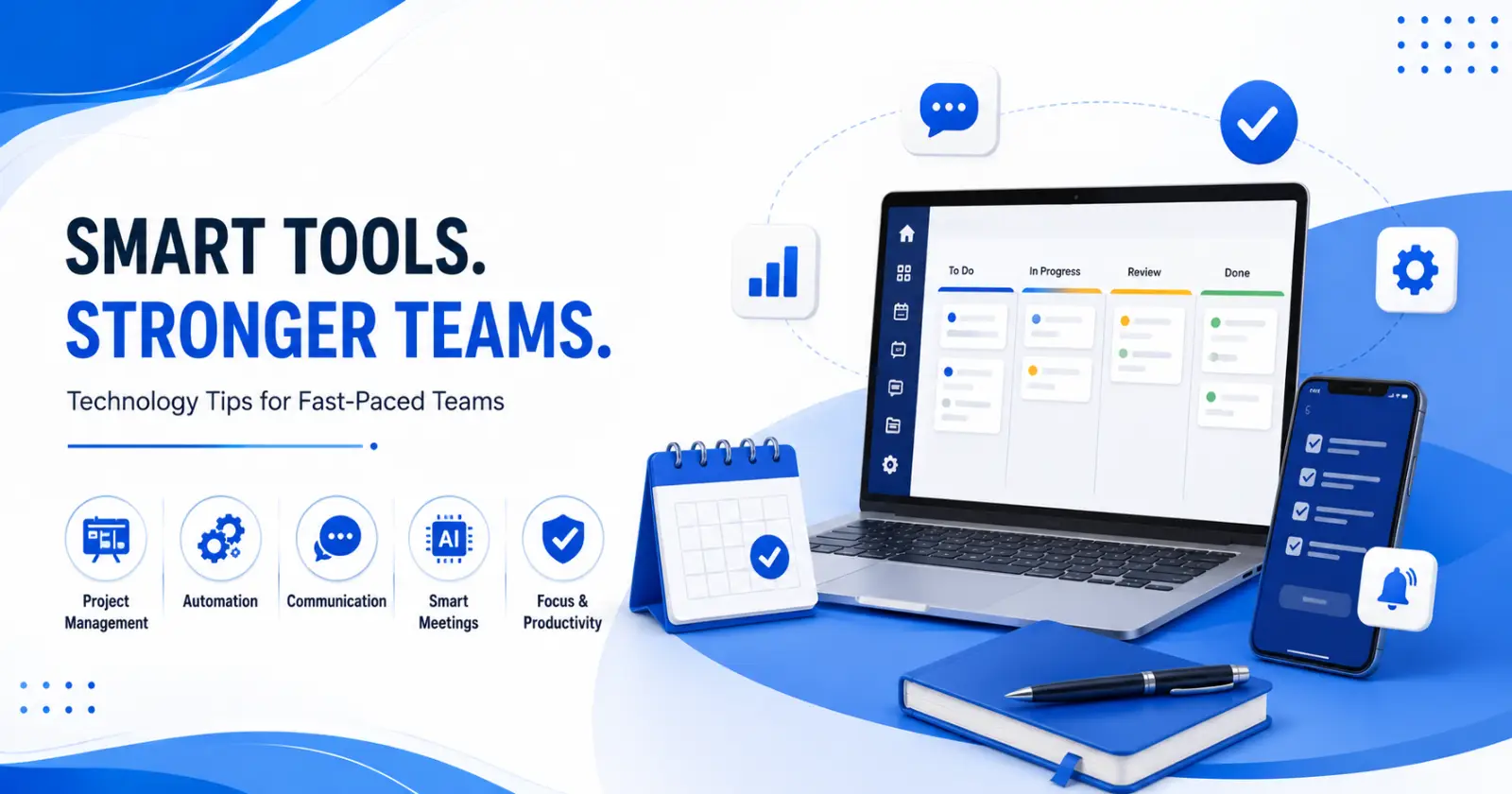
Fast-moving teams don’t usually struggle because people aren’t working hard enough. The real problem is that information gets lost. Someone misses a Slack message. A task sits in an inbox. Three people unknowingly work on the same thing. By the time anyone notices, hours have disappeared. The good news is that most of these problems aren’t difficult to fix. A few better habits and the right technology can completely change how a team operates.
Start by Making Work Visible
A surprising number of businesses still manage projects through email and chat. That sometimes works and sometimes doesn’t. Once multiple departments become involved, it’s almost impossible to remember who owns what. This is where project boards help.
Instead of asking for updates all day, everyone can simply look at the board and know what’s happening.
Popular choices include:
- Trello for smaller teams
- Jira for software development
- Asana for marketing and operations
- ClickUp if everything needs to live in one place
Stop Wasting Time On Small Jobs
Small repetitive tasks rarely seem like a problem. Five minutes here. Three minutes there. Then someone adds everything up and realises several hours disappear every week. Automation fixes a lot of this. For example:
- A website form can automatically create a task.
- New customers can be added to the CRM instantly.
- Files can be sorted into the correct folders without anyone touching them.
- Team notifications can be sent automatically when deadlines change.
Tools like Zapier and Microsoft Power Automate are popular because they remove the boring work that nobody actually enjoys doing.
Meetings Don’t Need to Create More Work
No one enjoys having pages of handwritten notes when they leave a meeting. Over the past year, AI has greatly simplified this. In a matter of minutes, Otter.ai, Microsoft Copilot, and other products can now record conversations, provide transcripts, extract action items, and summarise everything. This implies that rather than attempting to jot down every word, individuals genuinely pay attention during conversations. Simple change. Huge difference.
Not Every Workplace Communicates the Same Way
Most office teams are perfectly fine with Slack or Microsoft Teams. But that’s only one type of workplace. Think about warehouses. Construction projects. Music festivals. Trade exhibitions. Large sporting events. Outdoor production crews. Internet connections aren’t always reliable. Mobile networks become overloaded, especially when thousands of people are in one place. That’s why many organisations still depend on radios for events. They are a useful choice when teams need quick coordination across busy areas since they offer fast communication without depending on cell service.
Selecting communication tools based on people’s real workplaces typically yields better outcomes than just picking popular software.
Protect Time for Real Work
Notifications are helpful. Too many notifications aren’t. Every message forces the brain to stop, switch context, and start again. It doesn’t seem like much until it happens fifty times a day.
Many companies now encourage “focus blocks” where notifications stay muted for an hour or two. During that time people can actually finish something. Developers write code. Designers design. Writers write. Managers finally get through reports without checking chat every five minutes. Sometimes productivity comes from doing less, not adding another app.
Build A Place Where Answers Already Exist
Questions slow teams down. Not because people ask them, but because they’re usually the same questions every week. Where’s the latest pricing? How does this process work? Which template should be used? Instead of answering those repeatedly, successful teams build an internal knowledge base.
Platforms like Notion and Confluence make this simple. Most individuals don’t realise how much time a searchable document library saves, especially when new workers start working there.
Additionally, Google has continuously urged companies to provide highly useful and user-friendly information, and this guidance is applicable to both internal documentation and websites.
Measure What Actually Matters
The whole story isn’t usually shown by the number of hours spent. Outcomes do. A team that completes all projects on schedule is not less productive only because they put in six hours rather than eight.
So, rather than only monitoring activity, modern technologies like Monday.com, Bitrix24, and ClickUp make measuring finished work considerably simpler. That’s usually a healthier way to judge performance.
Final Thoughts
Technology isn’t the solution by itself. A company can subscribe to twenty different apps and still have poor communication. The teams that move fastest usually keep things surprisingly simple. Clear priorities. Less manual work. Fewer unnecessary meetings. Documentation that people can actually find. And communication tools that match the environment instead of following trends.
Those small improvements don’t feel so much on day one, but after a few months they become the difference between a team that’s constantly catching up and one that stays ahead.
Read Also – Benefits Of Project Management Professional Certification Online
