


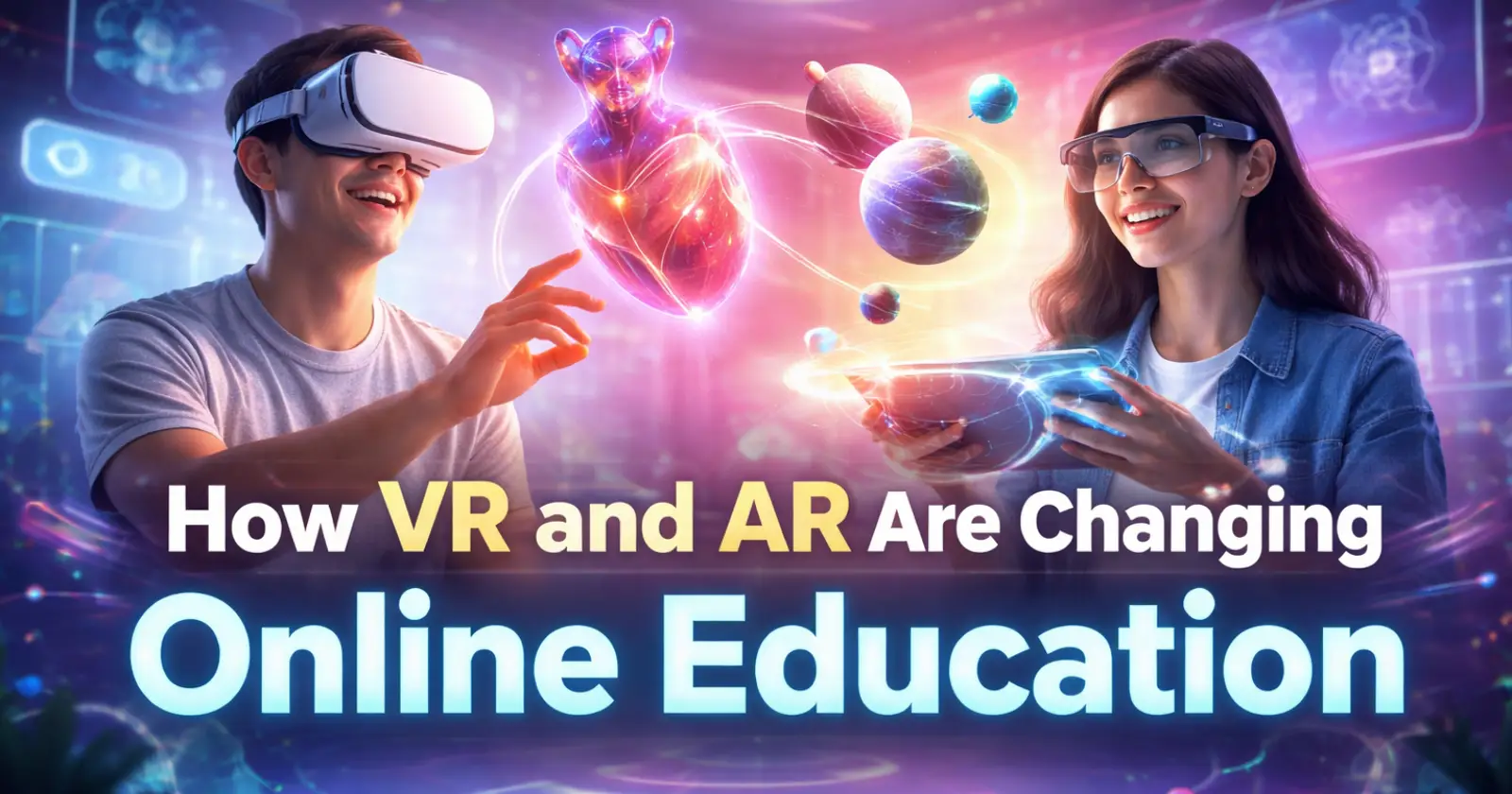
You already know most online classes don’t stick. You open a lecture, tell yourself you’ll focus, and ten minutes later, you’re somewhere else mentally, or literally. It’s not entirely your fault. The format is flat, repetitive, and easy to ignore. VR (Virtual Reality) and AR (Augmented Reality) are starting to fix that. They’re already creeping into how you learn. And once you try it properly, it’s hard to go back.
AR Makes Your Simple Room More Useful
VR is immersive, but AR is sneakier. With AR, your desk suddenly isn’t just a desk. You can project models, diagrams, or instructions right in front of you.
You don’t need a full setup either. Here in Australia, a phone can do a lot of it. That’s why AR might actually hit more people faster. You’re not waiting to afford a headset. You’re already holding the tool. VR and AR are not only for fun online games anymore. There’s a real purpose behind these tools, and you can finally get access to them.
Mistakes Don’t Cost You Anything Anymore
You’re probably used to playing it safe when you’re learning online. You don’t want to mess up in front of others, or you just skip things you don’t understand. VR and AR kind of kill that fear. You can try things, fail, reset, and go again without anyone watching.
Think about medical training. You can practise procedures over and over. No risk. No pressure. Just repetition until it sticks. That’s where it gets interesting, because industries that used to need physical training spaces are moving parts of that into virtual setups.
Group Work Stops Feeling Uncomfortable
Let’s be honest, online group work is usually awkward. Someone doesn’t show up, someone talks too much, and the rest just sit there. VR changes that dynamic a bit.
When you meet in a virtual space, it feels more like being in the same room. People still mess around, but that happens everywhere. The difference is that collaboration feels more natural. You’re building something together instead of just talking about it.
You Learn By Doing, Not Just Listening
A lot of online education still leans on lectures. You’re passively watching, listening, and taking notes. VR and AR push things toward doing instead. You assemble parts. You test ideas. You see what happens when you change something. That’s how most people actually learn, even if schools didn’t always work that way.
It’s not about replacing teachers either. It’s about giving you something better to work with. Instead of explaining something ten times, they can drop you into a scenario where you figure it out faster. It’s less talking, more doing, and if we were to be honest, that’s overdue.
It’s Not All Smooth, And That Matters
This isn’t perfect. VR can be expensive. Some people feel sick using it, and not every subject fits into a 3D simulation. There’s also the issue of access. Not everyone has the gear or the space. If online education is supposed to be more open, then adding expensive tech can push some people out.
But here’s the thing. Tech always starts messy and uneven. Phones used to be a luxury, too. Now you’d struggle to find someone without one. VR and AR might follow the same path, just slower.
Your Attention Span Is Being Dragged Back
You’ve probably noticed it’s harder to focus lately. We can blame short videos, constant notifications, and a bunch of other disruptions for that. Traditional online learning doesn’t compete well with that. Again, it’s too passive. And when you’re passive, you would rather be doing anything else, even if you know it’s better to listen to the professor than watch short, meaningless videos.
VR and AR fight back and work in your service by being more engaging. You’re moving, reacting, and making choices. You’re an active participant, and all of a sudden, you are too focused to even think about watching reels.
The Line Between Gaming And Learning Is Blurring
A lot of VR learning feels like a game. That’s not necessarily a bad thing. Games like Apna Ludo are good at keeping you engaged, and they add a layer of fun. On top of that, games also reward progress in ways that feel satisfying.
When you complete tasks and unlock levels, you see immediate results. That feedback loop keeps you going. Compare that to waiting weeks for a grade on an assignment. It’s not even close. Some people will say it makes learning less serious. But if you’re learning more and sticking with it longer, who cares if it feels like a game?
Teachers Aren’t Disappearing
There’s this idea that tech replaces teachers. That’s not really happening here. Saying this is just fearmongering and spreading misinformation. What’s happening here is a shift in what they do.
They’re less focused on delivering information and more on guiding you through it. They help you make sense of what you’re experiencing, answer questions, and keep you on track. That’s actually more valuable. Anyone can watch a video. Not everyone can help you understand what it means and how to use it.
Conclusion
Once you get used to this kind of learning, going back feels rough. Watching static slides after exploring a 3D environment just doesn’t hit the same level. Your expectations change. You want interaction and something that actually holds your attention. That pressure will push platforms to improve or get ignored. All in all, VR and AR aren’t just adding features. They’re raising the bar. And if online education doesn’t keep up, you’ll notice, and you won’t stick around.
