


Time holds a steady yet strong influence over daily routines, future plans, and personal behaviour, along with work-related duties. Many individuals consider time in smaller parts, such as hours or days, during planning activities or tight schedules. A common question that appears during such situations is how many hours in a year. It offers a wider understanding of time. This basic calculation provides clarity while supporting improved organization across weeks or months. A proper view of yearly hours allows people to arrange work, rest, learning, or personal tasks with a more organised approach.
Understanding The Basic Calculation
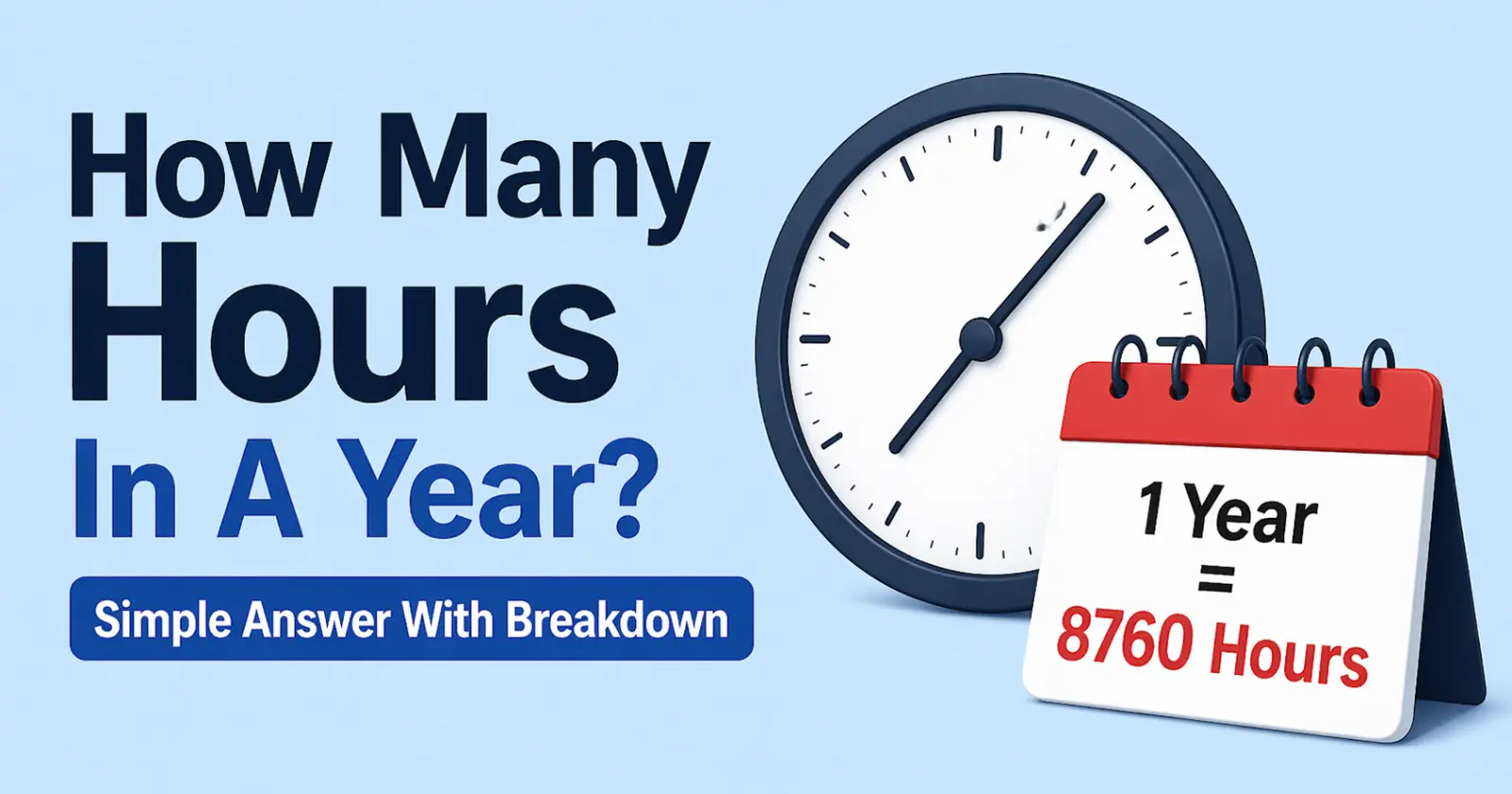
Yearly hours calculation starts off with an easy formula that is related to the total number of days within a year. A normal year consists of 365 days, while there are 24 hours in a day. By multiplying the numbers, we get 8760 hours in one year. We are able to determine all of the hours that we have in a year through this method. It makes the idea of calculating hours per year easier for us to understand. It can also help us be more aware of time management.
Leap Year Difference In Hours
Calculation of annual hours begins with a simple method that considers the total number of days in a regular year, which has 365 days, and a day has 24 hours. When the two numbers are multiplied, the answer becomes 8,760 hours per year. Such a calculation enables one to have full knowledge about the time available in a whole year. The issue of the number of hours in a year gets easier to comprehend.
Breaking Hours Into Months
The computation becomes more comprehensible by breaking down the annual hours into months for ease of use. Every month is made up of varying numbers of days, which makes some variations in the hourly breakdown per month. For example, there are 744 hours per month for a 31-day month, while there are 720 hours for a month with 30 days. The month of February has fewer hours since it has fewer days. The concept of yearly hours is more understandable when broken down into monthly hours.
Weekly And Daily Time Perspective
Dividing yearly hours into weeks or days offers a clearer understanding of time usage in everyday life. A year contains 52 weeks, which spreads 8760 hours into manageable segments. Each week holds 168 hours, which form a steady structure for planning routines. Daily understanding becomes more useful, since each day provides 24 hours for work, rest, or personal development. The concept of how many hours in a year gains importance when linked to daily actions. This viewpoint encourages careful use of time within shorter periods.
Read Also – How Many Weeks in a Year
Importance Of Time Awareness
A proper understanding of total yearly hours supports improved time management in both personal life and professional settings. Awareness of available hours allows individuals to focus on important tasks with better attention. The information allows you to feel that you are in control of your schedule and not confused about how to go about the planning process. The notion of the number of hours in a year encourages you to be responsible with your time rather than squander it.
Practical Use In Planning And Goals
Yearly hour calculation plays an important role in setting realistic goals across different areas of life. Individuals can divide their time into sections for work, learning, health, or personal interests. This planned method improves productivity while maintaining balance. The concept of how many hours in a year supports better decision-making during time allocation for various responsibilities. Clear planning based on available hours leads to steady progress over time. This approach helps prevent overloaded schedules while ensuring consistent effort towards meaningful targets.
Final Words
Time is a very valuable resource that every person has, shaping their daily life while playing an important role in reaching success in the future. The realization of how many hours are in a year is an easy way to get insights that facilitate good planning, concentration, and organization, as well as effective routines. No matter whether it is approached from day-to-day routines or annual goals, such awareness makes people feel closure to the usage of time. Having a systematic view of total hours allows for making wise choices in personal and work-related matters.
Read Also – How Many Seconds in a Day
